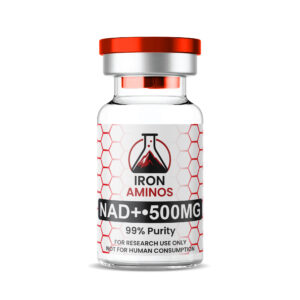
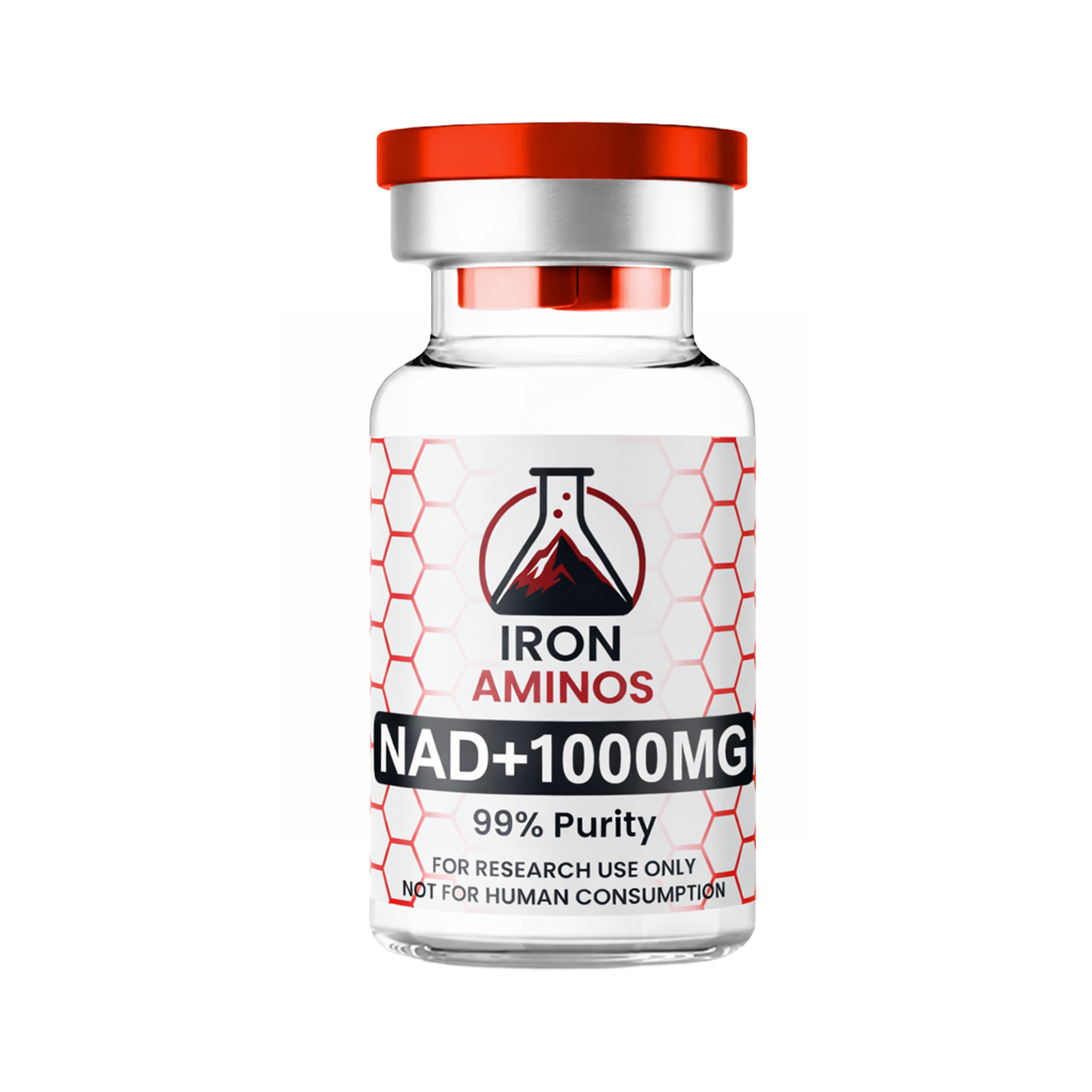
IRON AMINOS NAD+ 1000MG
Research-grade β-nicotinamide adenine dinucleotide (oxidized form) prepared for consistency and clear documentation in professional lab workflows.
Key Features
1000mg NAD+ per vial (lyophilized powder)
≥99% purity for reproducible results
Sterile, sealed glass vial with tamper-evident flip cap
Lot and batch labeling for traceability
Diluent not included
Specifications
Compound: NAD+ (oxidized nicotinamide adenine dinucleotide)
Role: Central redox cofactor (NAD+/NADH couple) and substrate for NAD-consuming enzymes
Form / appearance: Lyophilized powder, white to off-white
Amount: 1000mg per vial
Purity: ≥99%
Storage (lyophilized): Cool, dry, protected from light
Storage (after reconstitution): Refrigerate, prepare aliquots and use promptly per internal SOP (light and hydrolysis sensitive)
What’s Included
1 × NAD+ 1000mg vial (no diluent)
Handling
Reconstitute with an appropriate sterile diluent under aseptic technique. Minimize light exposure, avoid repeated freeze–thaw cycles, and consider sterile filtration if required by protocol. Confirm final pH and osmolality for your assay system.
Research Snapshot
Redox metabolism: NAD+ is an essential coenzyme for dehydrogenases across glycolysis, the TCA cycle, and β-oxidation. NAD+/NADH ratios help regulate cellular redox balance and energy flux.
Signaling functions: NAD+ also serves as a substrate for sirtuins, PARPs, and related ADP-ribosylation enzymes, linking NAD+ pool size to pathways involved in DNA repair, mitochondrial function, and stress responses.
Experimental use: Modulating NAD+ availability in cell and animal models can influence oxidative phosphorylation, mitochondrial biogenesis, and circadian and metabolic programs. Outcomes are model and protocol dependent. Due to light and hydrolysis sensitivity, fresh aliquots are commonly used to improve stability.
Compliance
For research use only. Not for human consumption.
Not a drug, food, or cosmetic and not intended to diagnose, treat, cure, or prevent any disease.